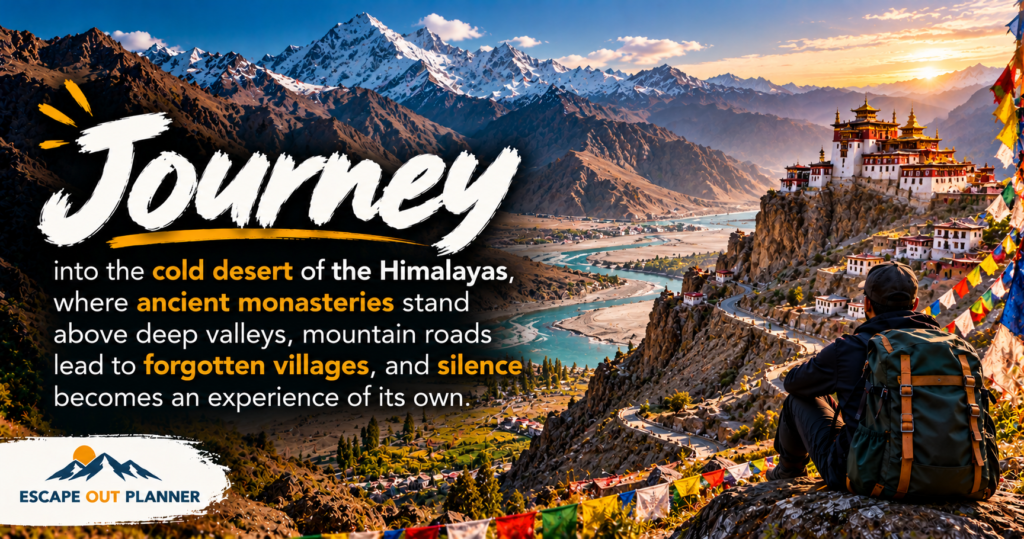
Journey into the cold desert of the Himalayas, where ancient monasteries stand above deep valleys, mountain roads lead to forgotten villages, and silence becomes an experience of its own.
Some places overwhelm you with beauty. Others leave you speechless. Spiti Valley does both.
Hidden in the high-altitude landscapes of Himachal Pradesh, Spiti is a world of rugged mountains, barren cliffs, winding rivers, and tiny villages that seem to exist between the earth and the sky. Here, the colours of the mountains change with the sunlight, prayer flags flutter against an endless blue sky, and ancient monasteries preserve stories passed down through generations.
Spiti is not a destination for those who want everything to be easy. The roads can be challenging, the weather unpredictable, and the distances between villages long. But for travellers willing to slow down and embrace the journey, Spiti offers something extraordinary: a chance to experience the Himalayas in their rawest and most honest form.
At Escape Out Planner, we believe Spiti is not simply a place to visit. It is a journey that teaches you to appreciate simplicity, respect nature, and discover beauty far beyond the ordinary tourist trail.
🏔️ Places to Discover in Spiti Valley
1. Kaza — The Heart of Spiti
Kaza is the main town of Spiti Valley and a natural base for exploring the surrounding villages and monasteries. Its small markets, cafés, mountain views, and local homestays offer a welcoming pause between long drives. Spend time walking through the town, talking with local residents, and discovering the everyday rhythm of life in this high-altitude desert. Kaza may be your base, but the stories you find here can become some of the most memorable parts of your journey.
2. Key Monastery — A Sacred World Above the Valley
Perched dramatically on a hill overlooking the Spiti River, Key Monastery is one of the region’s most recognisable landmarks. Its whitewashed buildings, prayer rooms, murals, and centuries-old Buddhist traditions create an atmosphere of deep cultural significance. Walk quietly through the monastery, observe local customs, and appreciate the devotion that sustains this remarkable place. Here, the mountains seem to hold centuries of prayers within their silence.
3. Kibber — Life at the Edge of the Mountains
Kibber is a high-altitude village surrounded by stark mountain scenery, open valleys, and traditional homes built for life in a challenging environment. Its remote setting offers a glimpse into the resilience and resourcefulness of Himalayan communities. Visitors may also explore nearby landscapes known for wildlife, including the snow leopard habitat of the wider region during suitable seasons with responsible local guidance. Kibber reminds us that the mountains are not just beautiful scenery; they are home to people and wildlife that deserve our respect.
4. Langza — The Village Beneath the Giant Buddha
Langza is famous for its large Buddha statue overlooking the village and the dramatic mountains beyond. The surrounding terrain is also known for marine fossils, reminders that this high Himalayan landscape was once beneath an ancient sea. Walk through the village, admire its traditional houses, and learn about the lives of families who call this remote place home. Langza offers a remarkable meeting of geology, culture, and Himalayan spirituality.
5. Hikkim — A Post Office in the High Himalayas
Hikkim is widely known for its high-altitude post office, where travellers often send postcards from one of the world’s most remarkable mountain settings. Beyond the familiar photo opportunity lies a quiet settlement shaped by the seasons and the challenges of remote mountain life. Send a postcard, speak with local residents when appropriate, and take time to admire the surrounding landscape. In an increasingly digital world, Hikkim makes the simple act of sending a handwritten message feel special again.
6. Komic — A Village Above the Ordinary
Komic is known for its extraordinary high-altitude setting, traditional homes, wide mountain views, and the presence of a historic Buddhist monastery. The surrounding landscape feels vast and otherworldly, with barren ridges stretching towards the horizon. Visit respectfully, enjoy the scenery, and remember that the village is a living community rather than just a sightseeing stop. Komic offers a powerful reminder of how life adapts to the extremes of the Himalayas.
7. Dhankar — Where Monastery and Mountains Meet
Dhankar is famous for its historic monastery, dramatically positioned above the meeting of mountain valleys. Its traditional buildings and striking setting reveal the deep relationship between spirituality and the Himalayan landscape. Explore the village and monastery respectfully, and admire the surrounding cliffs and river valleys. Dhankar feels like a place where history, faith, and geography have become part of the same story.
8. Pin Valley — A Wilder Side of Spiti
Pin Valley offers a different character from the stark open landscapes around Kaza, with river valleys, rugged slopes, scattered settlements, and the protected wilderness of Pin Valley National Park. Its remoteness makes it appealing to nature lovers and travellers who enjoy exploring beyond the usual route. Depending on the season and local conditions, the valley offers opportunities for village visits, scenic drives, and responsible wildlife awareness. Here, the beauty lies in the landscape’s untamed character and the delicate balance between people and nature.
9. Tabo — The Ancient Soul of Spiti
Tabo is known for its historic monastery, renowned for its ancient murals, sculptures, and Buddhist heritage. Its centuries-old spiritual traditions make it one of the most culturally significant places in the valley. Walk through the village, visit the monastery respectfully, and learn about the region’s history from local guides where available. Tabo reminds travellers that Spiti’s treasures are not only its mountains, but also the wisdom, art, and traditions preserved within them.
10. Chicham Bridge — A Road Suspended Above the Gorge
Chicham Bridge crosses a deep gorge and connects remote mountain settlements in a landscape that feels almost unreal. Standing near the bridge, you can appreciate the scale of the surrounding cliffs and the engineering required to connect communities in this challenging terrain. Enjoy the view from safe designated areas and follow local traffic guidance. Chicham is a reminder that every mountain road carries a story of connection, courage, and adaptation.
🍲 Foods You Must Try in Spiti
Food in Spiti reflects the region’s cold climate, Tibetan cultural influences, and the practical needs of high-altitude life.
- Thukpa: A warming noodle soup that feels especially comforting after a cold day outdoors.
- Momos: Steamed or fried dumplings, commonly enjoyed with spicy chutney.
- Thenthuk: A traditional hand-pulled noodle soup that makes a hearty mountain meal.
- Tingmo: A soft steamed bread often served alongside savoury dishes.
- Butter tea: A traditional Himalayan drink with a distinctive, rich flavour.
- Chhang, where traditionally available: A regional fermented beverage; check local customs and availability.
- Simple homestay meals: Try locally prepared seasonal vegetables, dal, rice, and other home-cooked dishes.
Food availability can be limited in remote villages, particularly outside the main travel season. Eating at local homestays is a wonderful way to experience the region’s hospitality while supporting the community.
🌿 Things to Do: Experience Spiti Slowly
Spiti is not a destination where every day needs to be filled with activities. Sometimes the most memorable experience is simply watching sunlight move across a barren mountain.
- Explore ancient monasteries: Learn about Buddhist traditions, art, and the spiritual history of the valley.
- Walk through remote villages: Discover traditional architecture and observe everyday mountain life respectfully.
- Watch the changing mountain colours: Enjoy sunrise and sunset when weather and your itinerary allow.
- Send a postcard from Hikkim: Share a handwritten memory from the high Himalayas.
- Enjoy a homestay evening: Sit with your hosts, enjoy a warm meal, and listen to stories of life in Spiti.
- Discover the cold desert landscape: Appreciate the unusual combination of high mountains, dry terrain, and deep blue skies.
- Look for wildlife responsibly: Join knowledgeable local guides and keep a safe distance from animals.
- Spend time without a screen: Read, write, photograph the landscape, or simply enjoy the quiet.
- Respect local traditions: Dress appropriately at monasteries, ask before photographing people, and follow community guidance.
- Keep your plans flexible: Weather, road conditions, and altitude can change what is possible each day.
⚠️ Important Travel Warning: High Altitude & Harsh Conditions
Spiti Valley is a high-altitude cold desert. Its beauty comes with genuine physical and logistical challenges.
- Altitude sickness: Many destinations lie above 3,000 metres, and some villages are considerably higher. Headaches, nausea, dizziness, and unusual fatigue can indicate altitude sickness.
- Acclimatisation: Plan a gradual ascent and allow your body time to adjust. Avoid strenuous activity immediately after reaching high elevations.
- Severe cold: Nights can be extremely cold, even when daytime sunshine feels warm. Carry insulated layers, gloves, a warm hat, and suitable footwear.
- Road and weather risks: Landslides, snow, ice, road closures, and long travel times can disrupt plans.
- Limited services: Medical facilities, fuel, mobile connectivity, and supplies may be limited in remote areas.
- Travel insurance: Consider insurance that specifically covers high-altitude travel and emergency evacuation where available.
Safety comes first: If symptoms of altitude sickness develop, do not continue ascending. Seek medical advice promptly. Severe breathlessness at rest, confusion, or difficulty walking straight are emergencies requiring immediate medical assistance and descent.
Spiti rewards careful planning. Travel with an experienced local operator, check current road conditions, and never sacrifice safety to reach a particular viewpoint.
📸 Take Memories, Leave Only Footprints
Some memories are captured by a camera. Others stay with you in the quietest corners of your heart.
- Photograph the mountains glowing in the first or last light of day.
- Capture prayer flags fluttering against the vast Himalayan sky.
- Send a postcard from Hikkim to someone special.
- Record the stories you hear from local people, with their permission.
- Taste a traditional dish and remember the warmth of the homestay where you enjoyed it.
- Buy locally made crafts where available and support small community businesses.
- Keep a journal of the unexpected moments that made you smile.
- Put your camera away sometimes and simply watch the mountains.
Take home photographs, stories, friendships, and a deeper appreciation of life in the mountains. Leave behind no litter, respect local customs, and take only memories.
💚 Discover the Soul of Spiti with Escape Out Planner
Spiti is not simply a road trip through spectacular landscapes. It is an encounter with a different rhythm of life — one shaped by altitude, weather, tradition, and the extraordinary resilience of mountain communities.
You may come for the monasteries, the high villages, the dramatic roads, or the chance to see a landscape unlike anywhere else. But you may leave remembering something much simpler: a warm cup of tea, a conversation with a local family, the silence of a cold desert evening, or the feeling of looking up at mountains that seem to have no end.
At Escape Out Planner, we believe the most meaningful journeys are those that connect us with the places we visit. We encourage travellers to explore thoughtfully, respect the Himalayas, and leave enough room in every itinerary for unexpected moments.
Come for the adventure. Stay for the silence. Return with stories that last a lifetime.
Escape Out Planner — Travel Made Easy.
Follow the mountain roads. Discover the hidden stories. Take memories home.